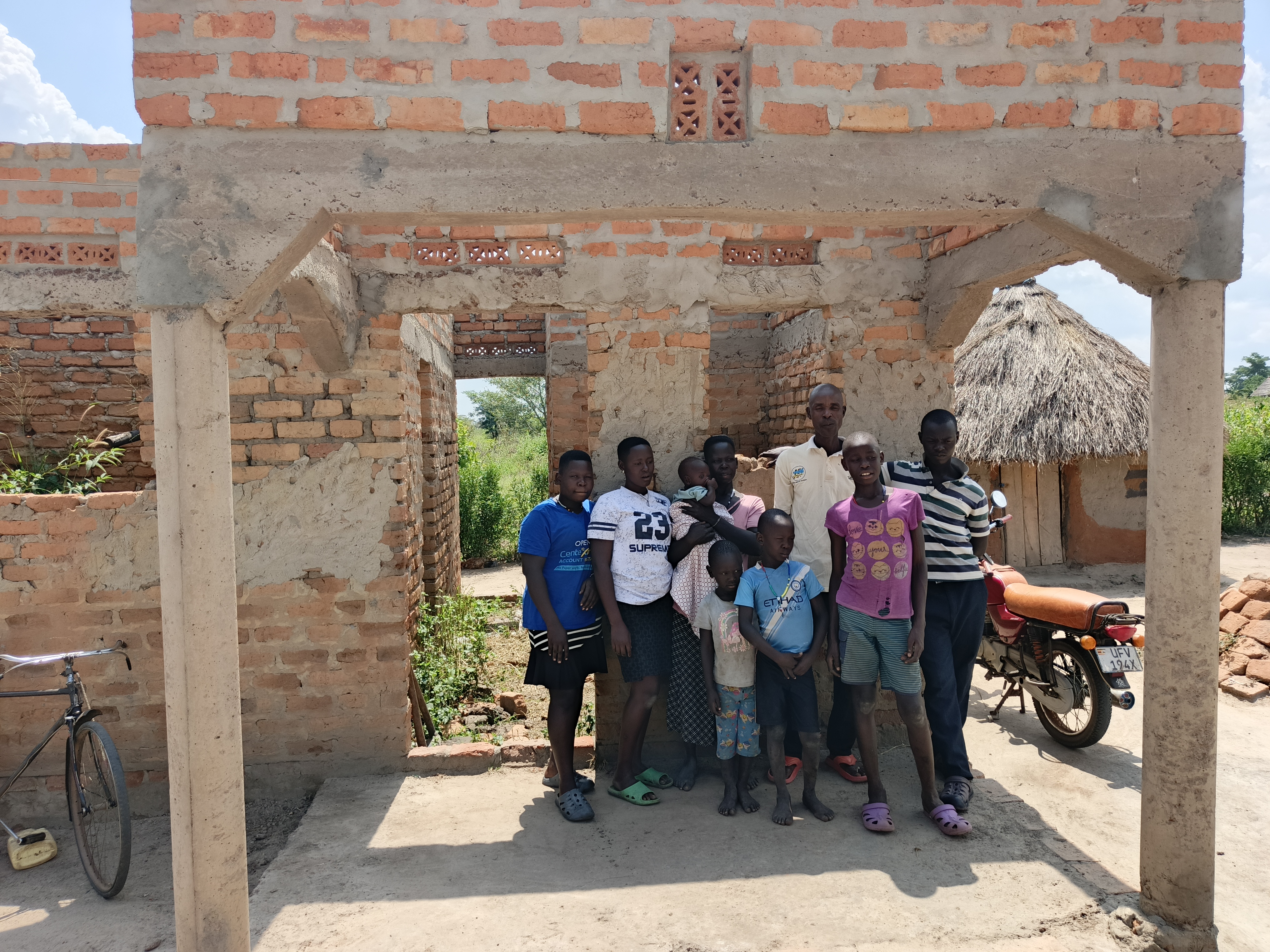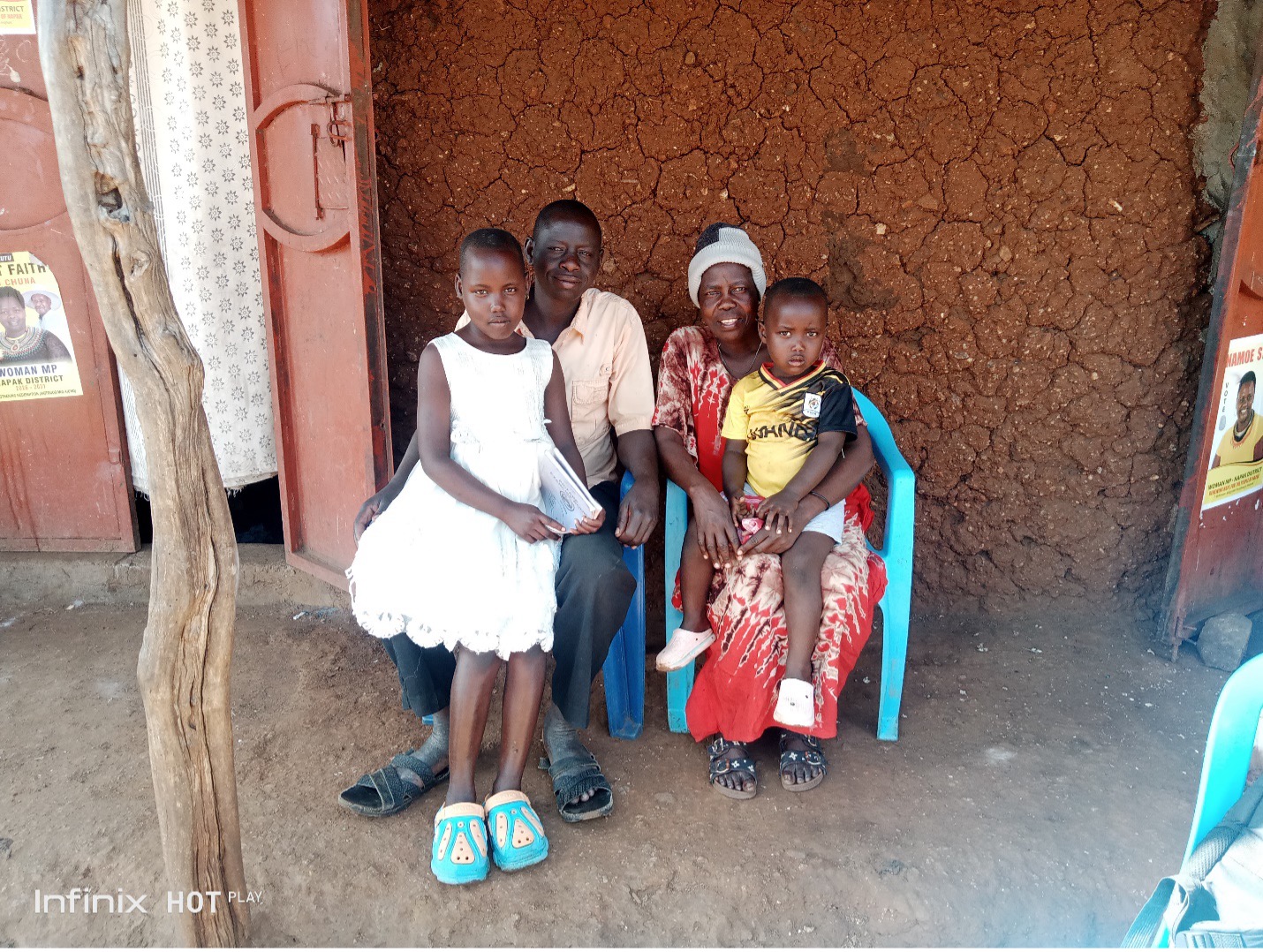
For many years, Simon Bruno Lokamali and his wife, Betty Kulume, believed they were doing all they could as parents. Living in Lokeru Village, Lolet Parish, Lorengechora Sub-county in Napak District, the couple worked hard to provide for their three children—one boy and two girls aged four, six, and eight, who attend Nursery, Primary One, and Primary Three at Lokododi Primary School.
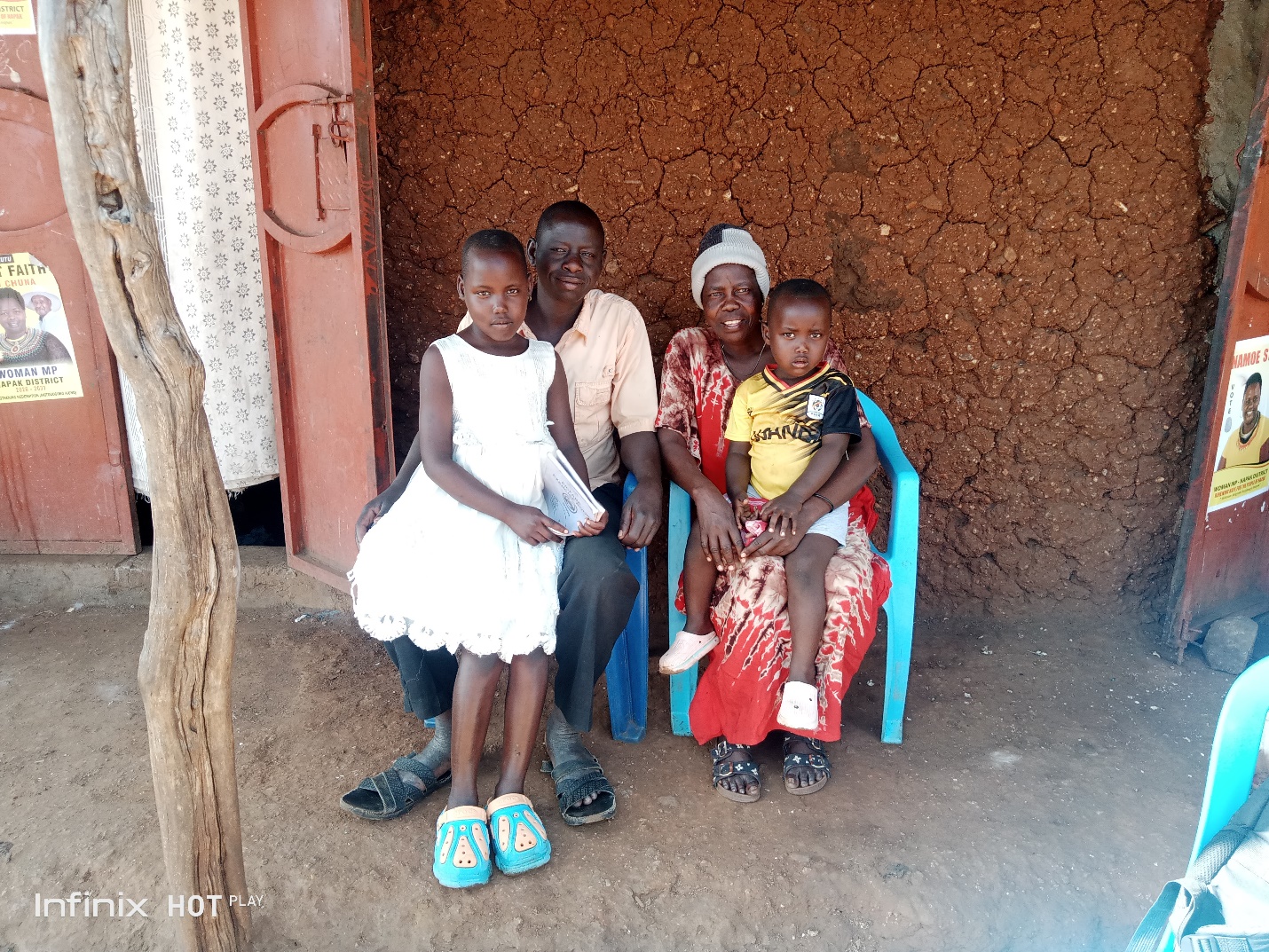
Simon and Betty smiling with their children
Like many parents in their community, Simon and Betty viewed parenting mainly as providing food, shelter, and other basic needs. While they cared deeply for their children, they had little understanding of the emotional, social, and developmental support children require to thrive.
That perspective changed when they joined the Positive Parenting Programme supported by Help a Child and implemented by Share an Opportunity Uganda (SAO-U). The programme reached 120 parents—60 men and 60 women—from Lokeru Village through participatory training facilitated by trained Trainers of Trainers (ToTs). Participants attended an intensive five-day training in November 2025, followed by a two-day refresher course in March 2026.
The sessions focused on positive parenting practices, child protection, supporting children's education, understanding child development, and strengthening communication within families. For Simon and Betty, the training marked the beginning of a life-changing journey.
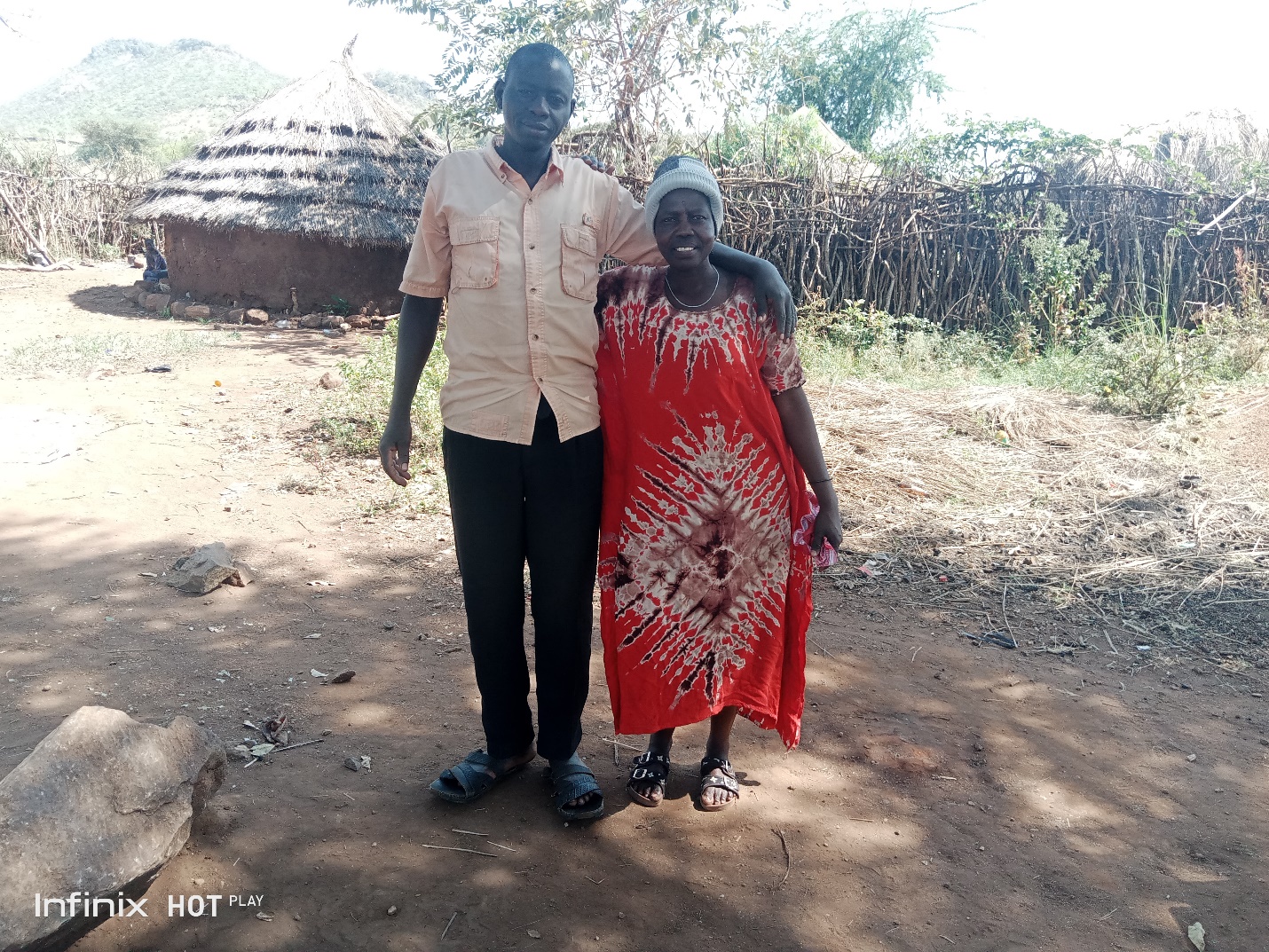
Simon and Betty together, looking happy and supportive
The transformation was especially significant for Simon, who admits that before the training, alcohol abuse had negatively affected his family life. Frequent drinking contributed to conflict at home, limited his involvement in raising the children, and made it difficult to meet the family's needs consistently. These challenges affected not only his relationship with Betty but also the wellbeing of their children.
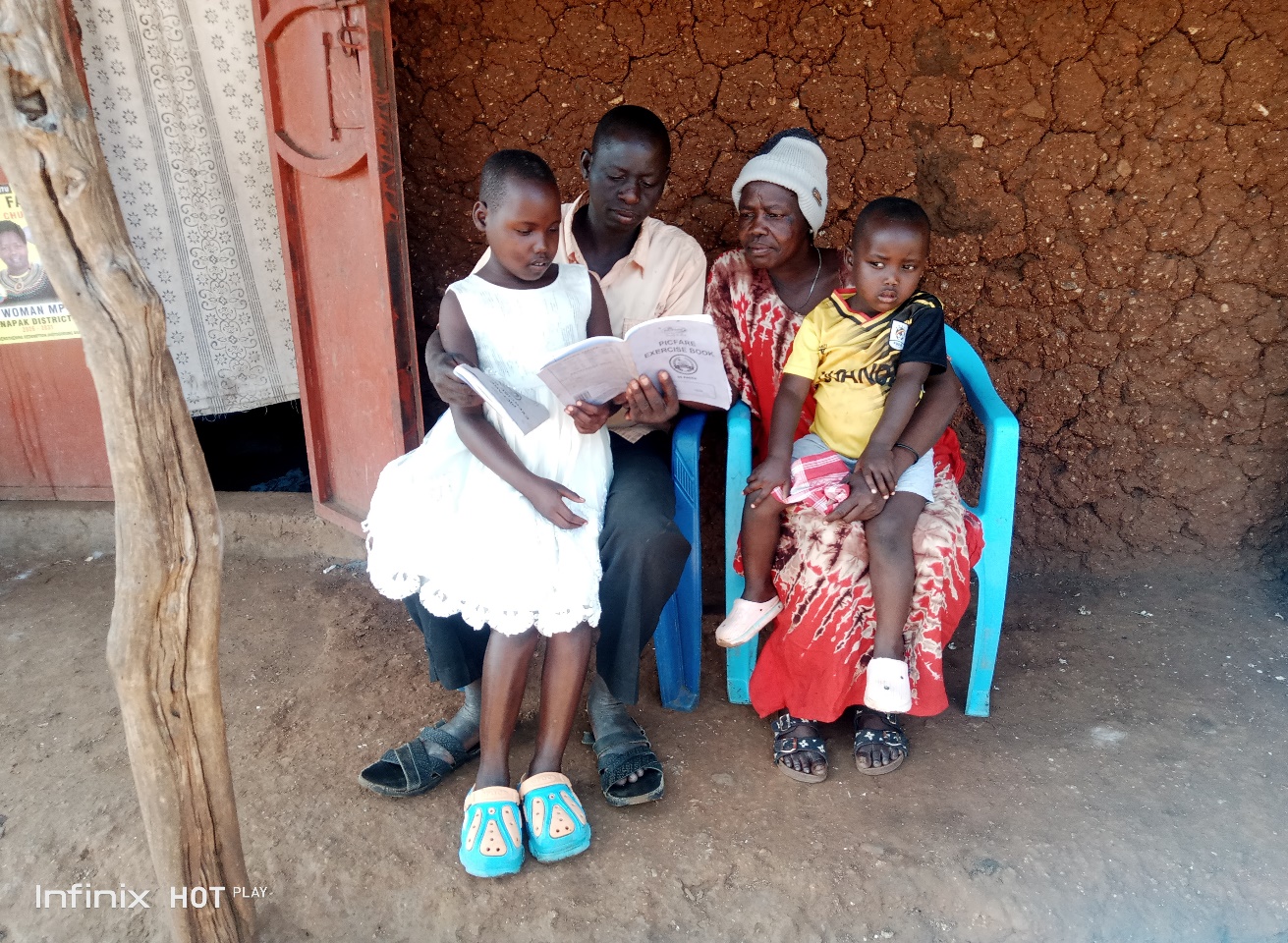
Simon and Betty checking their child's schoolbook
Today, Simon tells a very different story.
“Before the training, I thought parenting was just about providing for children. Now I help my children with homework, spend more time with my family, and support my wife in daily activities. Our relationship has improved, and there is more peace at home.”
Betty has witnessed the remarkable change firsthand.
“We now work together as a family. Simon supports me with household chores like fetching water, helping the children with homework, and assisting in my retail business. The children are happier, more open, and more confident in talking about school.”
The changes within the household have been profound. Their children now attend school more regularly, actively participate in class, and enjoy a more supportive and peaceful home environment. Household responsibilities are shared, communication has improved, and family conflicts have reduced significantly.
The couple's commitment to change has also earned them recognition within their community. Simon was selected through a community-led process as a Model Parent, while Betty was recognised as a Model Couple Representative. Betty also serves as the leader of the Amaler Self-Help Group, while Simon is a respected member of the Orokomiti Clan Elders.
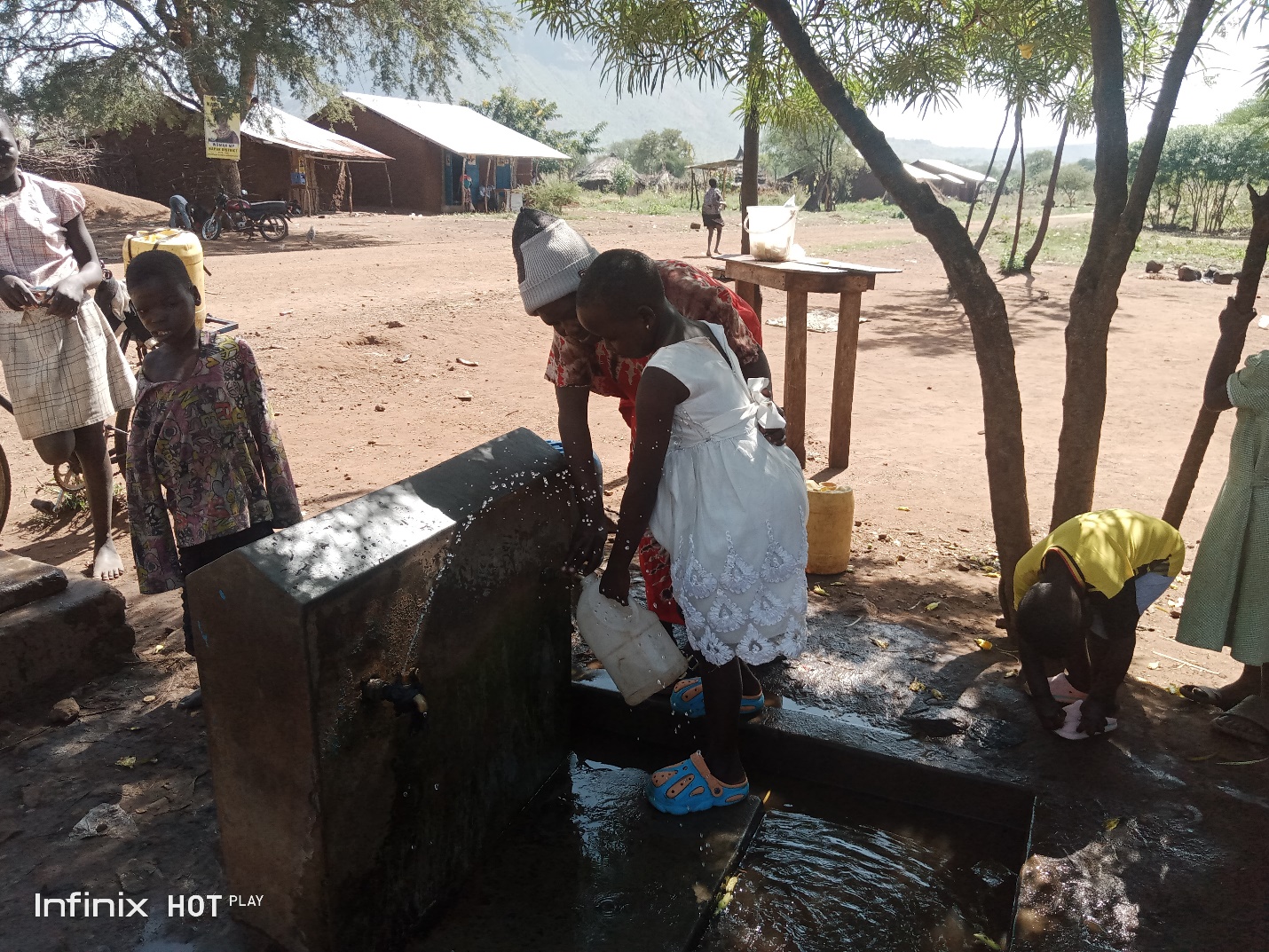
Betty helping their child fetch water
Rather than keeping their experience to themselves, Simon and Betty have become champions of positive parenting in Lokeru Village. Betty regularly shares parenting lessons during Self-Help Group meetings and community gatherings, while both mentor other families on child care, hygiene, education, and family wellbeing. Together, they are influencing approximately 120 community members through parenting groups and Self-Help Groups.
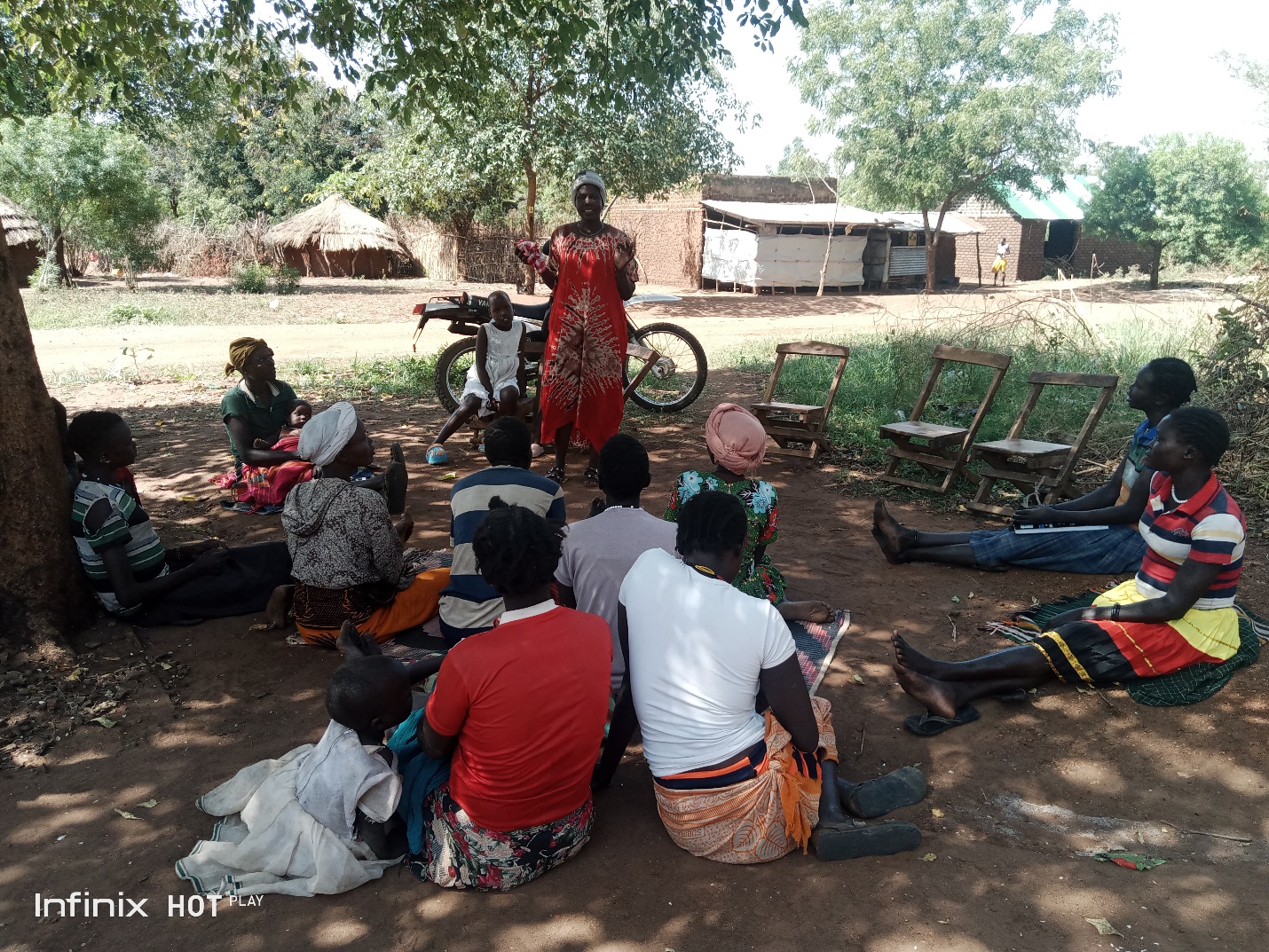
Betty advocating for child support during a SHG meeting.
Their example is inspiring other families to embrace positive parenting practices, creating a ripple effect that is gradually transforming attitudes and behaviours beyond their own household.
Simon and Betty's story demonstrates that when parents are equipped with the right knowledge and support, lasting change becomes possible. Through the Positive Parenting Programme, one family has moved from conflict to cooperation, from simply providing for children to intentionally nurturing them, and from receiving support to becoming role models for others.
Their journey is a powerful reminder that strengthening families is one of the most effective ways to build stronger, healthier, and more resilient communities.